What is RTP and How It Works
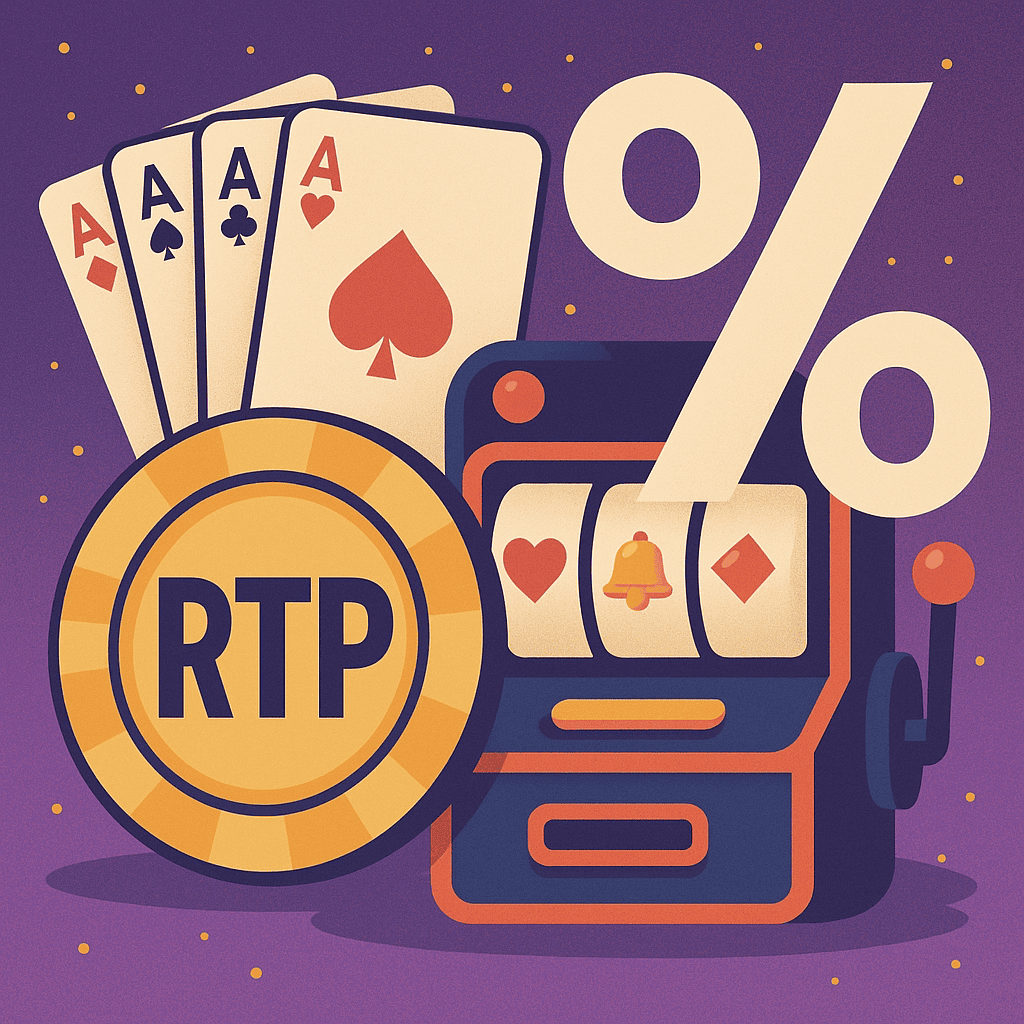
Return to Player, or RTP, is a crucial metric in evaluating how profitable a game is over time. Expressed as a percentage, it shows how much of the total wagered money the game pays back to players in the long run.
For example, a game with an RTP of 97% will, on average, return $97 for every $100 wagered. The remaining 3% is the house edge. RTP does not guarantee short-term results but serves as a useful guideline for comparing games.
How RTP is Calculated
RTP is not based on a few rounds or short sessions. It is calculated over millions or even billions of simulated spins, hands, or game outcomes. This large sample size provides statistical reliability and reflects the game’s mathematical design.
It is important to note that players will not experience the exact RTP figure in a single session. Actual returns can vary widely in the short term.
RTP in Slots
Most licensed slot machines have publicly available RTP figures. These are often published by developers and verified by independent testing labs. RTP in slots typically ranges from 92% to 97%.
Some developers provide multiple RTP options for a single game, depending on the operator’s settings. For example, the same slot may run at 96.2% or 94.1% on different platforms. These figures are not visible during gameplay, so it pays to check in advance where possible.
RTP in Poker
In poker, RTP depends on the player’s skill. Unlike slots, poker is not a pure game of chance. Skilled players can achieve positive long-term results, meaning their RTP exceeds 100%.
This makes poker unique in the gambling ecosystem. RTP in poker is less about fixed numbers and more about strategic decision-making, table selection, and managing variance. Tools like trackers and hand histories help players evaluate their effective RTP over thousands of hands.
RTP vs Volatility
RTP is not the same as volatility. While RTP measures the long-term return, volatility describes how much the results can swing in the short term.
A high-volatility slot may have an RTP of 96% but offer rare large wins and long losing streaks. A low-volatility game with the same RTP pays more frequently but in smaller amounts. Knowing both metrics helps players match games to their risk appetite.
RTP vs Hit Frequency

Another related concept is hit frequency, which shows how often a player can expect to win. For instance, a hit frequency of 20% means a win occurs roughly once every five spins.
This number says nothing about win size or RTP. A game can have a high hit frequency but still return less over time if the payouts are low.
Final Thoughts
RTP is a reliable benchmark for understanding the expected return from a game, but it is only one part of the picture. Combining RTP knowledge with insights into volatility and hit frequency allows for smarter, more informed play.